
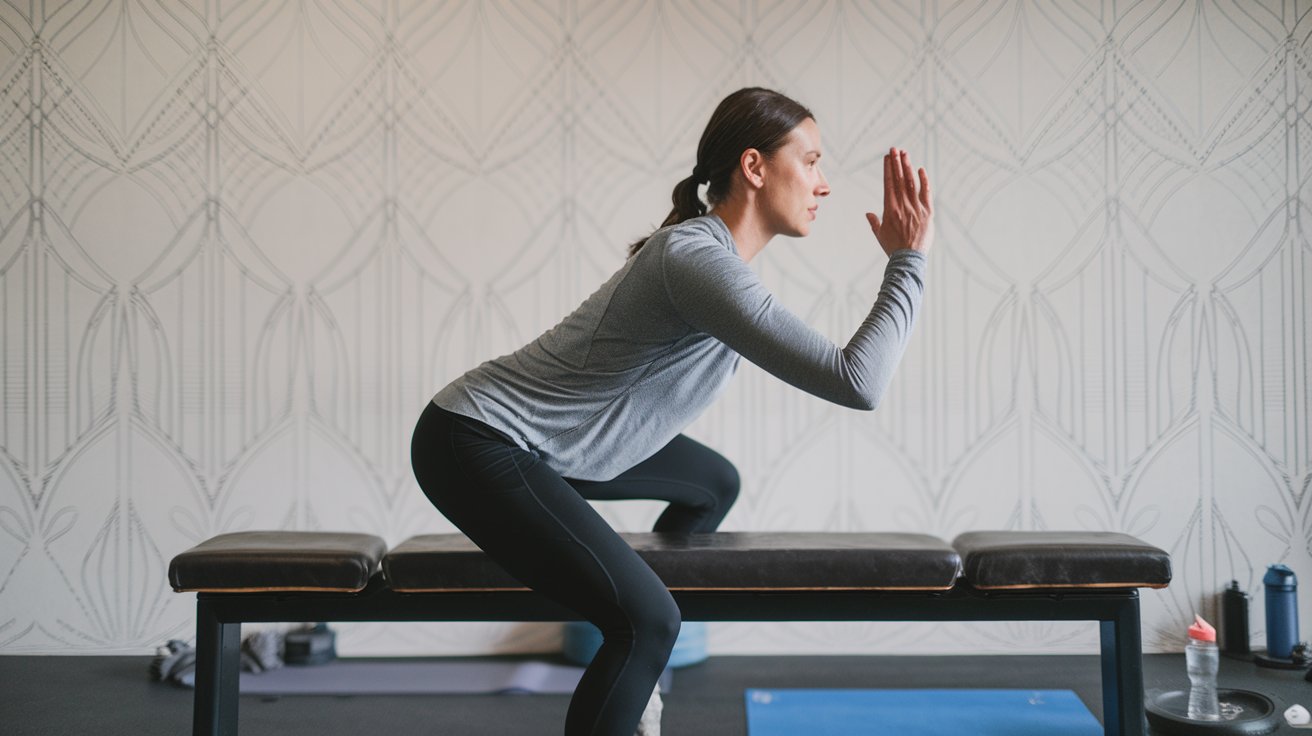
Squats with one leg on bench, commonly known as Bulgarian split squats, are a powerful unilateral exercise that targets your quads, glutes, and hamstrings while improving balance and stability. This single-leg movement pattern challenges each leg independently, making it an essential exercise for building functional strength and correcting muscle imbalances in your lower body workout routine.
What Are Squats With One Leg on Bench Called
The squat with one leg on bench is officially called a Bulgarian split squat, named after the Bulgarian Olympic weightlifting team that popularized this exercise in the 1980s. This unilateral exercise involves placing your rear foot elevated on a bench or platform while performing a squatting motion with your front leg. Unlike traditional squats that work both legs simultaneously, this movement isolates each leg individually.
The exercise is also referred to as a rear-foot-elevated split squat or elevated split squat in fitness literature. The key distinguishing factor is the elevated rear foot position, which creates a greater range of motion and increased challenge compared to regular split squats performed on level ground. This positioning allows for deeper hip flexion and enhanced muscle activation in the working leg.
Muscles Worked by Single Leg Bench Squats
Single leg bench squats are a compound exercise that targets multiple muscle groups throughout your lower body. The primary muscles worked include the quadriceps, which handle the majority of the workload during the lowering and lifting phases. Your glutes, particularly the gluteus maximus, provide hip extension power and stability throughout the movement.
Secondary muscles activated during Bulgarian split squats include the hamstrings, which assist in hip extension and provide knee stability. The calves work to maintain balance and provide propulsion during the concentric phase. Core muscles, including the rectus abdominis and obliques, engage to maintain proper posture and prevent excessive forward lean during the exercise.
Primary Muscle Activation
The quadriceps receive the highest activation during squats with one leg on bench, with EMG studies showing up to 85% muscle activation in the vastus lateralis and rectus femoris. The gluteus maximus demonstrates approximately 70% activation, making this exercise highly effective for building both quad strength and glute development. This dual activation pattern makes Bulgarian split squats superior to many isolation exercises for comprehensive leg development.
Stabilizer Muscle Engagement
The unilateral nature of single leg bench squats requires significant stabilizer muscle engagement. The gluteus medius and minimus work overtime to prevent knee valgus and maintain proper hip alignment. Small intrinsic foot muscles activate to maintain balance, while the deep core muscles provide spinal stability. This comprehensive muscle recruitment pattern improves functional movement patterns and athletic performance.
Benefits of Bulgarian Split Squats
Bulgarian split squats offer numerous advantages over bilateral squating movements. They effectively address muscle imbalances by forcing each leg to work independently, preventing the stronger leg from compensating for the weaker side. This unilateral training approach translates directly to improved athletic performance in sports requiring single-leg strength and stability.
The exercise provides enhanced range of motion compared to traditional squats, allowing for deeper hip flexion and greater muscle stretch. This increased range promotes improved flexibility in the hip flexors and ankles while building strength through a fuller movement pattern. Research indicates that Bulgarian split squats can produce similar or greater strength gains compared to back squats while reducing spinal loading by approximately 40%.
Functional Movement Benefits
The single leg movement pattern of Bulgarian split squats mirrors many daily activities and athletic movements. Running, jumping, climbing stairs, and changing direction all require unilateral leg strength and stability. Regular practice of this exercise improves proprioception and neuromuscular control, reducing injury risk during dynamic activities and enhancing overall movement quality.
Strength and Hypertrophy Advantages
Studies from 2024 demonstrate that Bulgarian split squats can produce comparable quadriceps hypertrophy to back squats while requiring significantly less external load. The unilateral nature creates a greater stability challenge, leading to increased motor unit recruitment and enhanced strength gains. This exercise allows individuals with lower back issues to train legs effectively without excessive spinal loading.
Proper Form and Technique
Executing squats with one leg on bench requires precise setup and movement control. Begin by positioning yourself 2-3 feet in front of a bench or platform approximately 12-16 inches high. Place the top of your rear foot on the bench with your front foot planted firmly on the ground. Your front thigh should be perpendicular to the floor when in the bottom position.
Initiate the movement by lowering your body until your front thigh reaches parallel to the floor, ensuring your knee tracks over your toes. The majority of your weight should remain on your front leg, with the rear leg providing minimal support. Drive through your front heel to return to the starting position, maintaining an upright torso throughout the entire range of motion.
Common Mistakes and How to Avoid Them
One of the most frequent errors in Bulgarian split squats is placing too much weight on the rear leg. The elevated leg should provide balance only, with approximately 80-90% of your body weight supported by the front leg. Excessive rear leg involvement reduces the training stimulus and can lead to poor movement patterns.
Another common mistake involves improper foot positioning, particularly placing the front foot too close to the bench. This creates an acute knee angle and places excessive stress on the knee joint. Ensure your front foot is positioned far enough forward that your shin remains relatively vertical throughout the movement, preventing forward knee travel beyond the toes.
Balance and Stability Issues
Many beginners struggle with balance during single leg bench squats, often leading to lateral swaying or forward lean. Start with bodyweight only and focus on controlled, slow movements to develop proprioception. Use a wall or stationary object for light finger support during the learning phase, gradually reducing assistance as balance improves. Consistent practice typically resolves stability issues within 2-3 weeks.
Range of Motion Errors
Insufficient depth is another prevalent issue with squats with one leg on bench. Many practitioners stop short of full range of motion, limiting muscle activation and strength gains. Aim to lower until your front thigh is parallel to the floor or slightly below, ensuring adequate hip flexion. Conversely, excessive depth that causes knee pain or loss of control should be avoided.
Why Pistol Squats Are Difficult
Pistol squats, while related to Bulgarian split squats, present a significantly higher difficulty level due to their single-leg, unsupported nature. Unlike squats with one leg on bench, pistol squats require performing a full squat on one leg with the other leg extended forward, demanding exceptional balance, flexibility, and unilateral strength.
The primary challenge of pistol squats lies in the mobility requirements, particularly ankle dorsiflexion and hip flexion needed to maintain balance while descending. Most individuals lack the necessary ankle mobility to keep their heel down while squatting to depth on one leg. Additionally, the strength demands are substantial, requiring the working leg to lift the entire body weight plus the extended leg from a deep squat position.
Programming and Progression Strategies
When incorporating Bulgarian split squats into your training routine, begin with bodyweight versions focusing on perfect form and full range of motion. Start with 2-3 sets of 8-12 repetitions per leg, 2-3 times per week. Allow adequate recovery between sessions as the unilateral nature can create significant muscle fatigue and delayed onset muscle soreness.
Progression can follow multiple pathways including increased repetitions, added external load, or tempo modifications. Single leg bench squats can be loaded with dumbbells, barbells, or weighted vests as strength improves. Advanced practitioners may incorporate pause reps, deficit variations, or plyometric elements to further challenge the movement pattern and enhance training adaptations.
Beginner Programming Guidelines
New trainees should master bodyweight Bulgarian split squats before adding external resistance. Focus on achieving 3 sets of 15 perfect repetitions per leg before progressing to weighted versions. Start with light dumbbells (5-10 pounds) and gradually increase load by 2.5-5 pounds per week while maintaining proper form and full range of motion.
Advanced Progression Techniques
Experienced lifters can implement advanced techniques to maximize single leg bench squat benefits. Tempo manipulations, such as 3-second eccentric phases, increase time under tension and promote hypertrophy. Deficit variations, performed with the front foot elevated 2-4 inches, increase range of motion and challenge flexibility. Jumping Bulgarian split squats develop explosive power and athletic performance.
Variations and Modifications
Several variations of squats with one leg on bench can target different aspects of leg development and accommodate various fitness levels. The reverse lunge to Bulgarian split squat combination adds a dynamic element while maintaining the unilateral focus. Lateral Bulgarian split squats shift emphasis to the gluteus medius and improve frontal plane stability.
For individuals with mobility limitations, assisted versions using TRX straps or suspension trainers can provide support while maintaining the movement pattern. Conversely, advanced practitioners may explore single-arm variations that challenge core stability or incorporate unstable surfaces to enhance proprioceptive demands and functional transfer.
Related video about squats with one leg on bench
This video complements the article information with a practical visual demonstration.
Everything you need to know about squats with one leg on bench
What is a squat with one leg on a bench called?
A squat with one leg on a bench is called a Bulgarian split squat or rear-foot-elevated split squat. This exercise was popularized by Bulgarian Olympic weightlifters in the 1980s and involves placing your rear foot on an elevated surface while performing a squatting motion with your front leg. The elevated position creates greater range of motion and increased challenge compared to regular split squats.
What muscles do single leg bench squats work?
Single leg bench squats primarily work the quadriceps, glutes, and hamstrings of the working leg. Secondary muscles include the calves, core stabilizers, and hip stabilizers like the gluteus medius. EMG studies show up to 85% quadriceps activation and 70% gluteus maximus activation, making it highly effective for comprehensive lower body development while improving balance and stability.
What is Bulgarian split squat good for?
Bulgarian split squats are excellent for building unilateral leg strength, correcting muscle imbalances, and improving functional movement patterns. They provide greater range of motion than traditional squats while reducing spinal loading by 40%. Benefits include enhanced athletic performance, improved balance and stability, increased quadriceps and glute strength, and better preparation for daily activities requiring single-leg strength.
Why is a pistol squat so difficult?
Pistol squats are extremely difficult because they require performing a full squat on one leg without any support, demanding exceptional balance, flexibility, and unilateral strength. The primary challenges include ankle dorsiflexion mobility requirements, hip flexion needed to maintain balance, and the strength to lift entire body weight plus the extended leg from a deep squat position. Most people lack the necessary mobility and strength for proper execution.
| Exercise Aspect | Key Details | Primary Benefit |
|---|---|---|
| Muscle Activation | 85% quadriceps, 70% gluteus maximus | Comprehensive leg development |
| Spinal Loading | 40% reduction vs back squats | Lower back safety |
| Range of Motion | Greater hip flexion than bilateral squats | Enhanced flexibility |
| Unilateral Training | Independent leg strengthening | Corrects muscle imbalances |

