
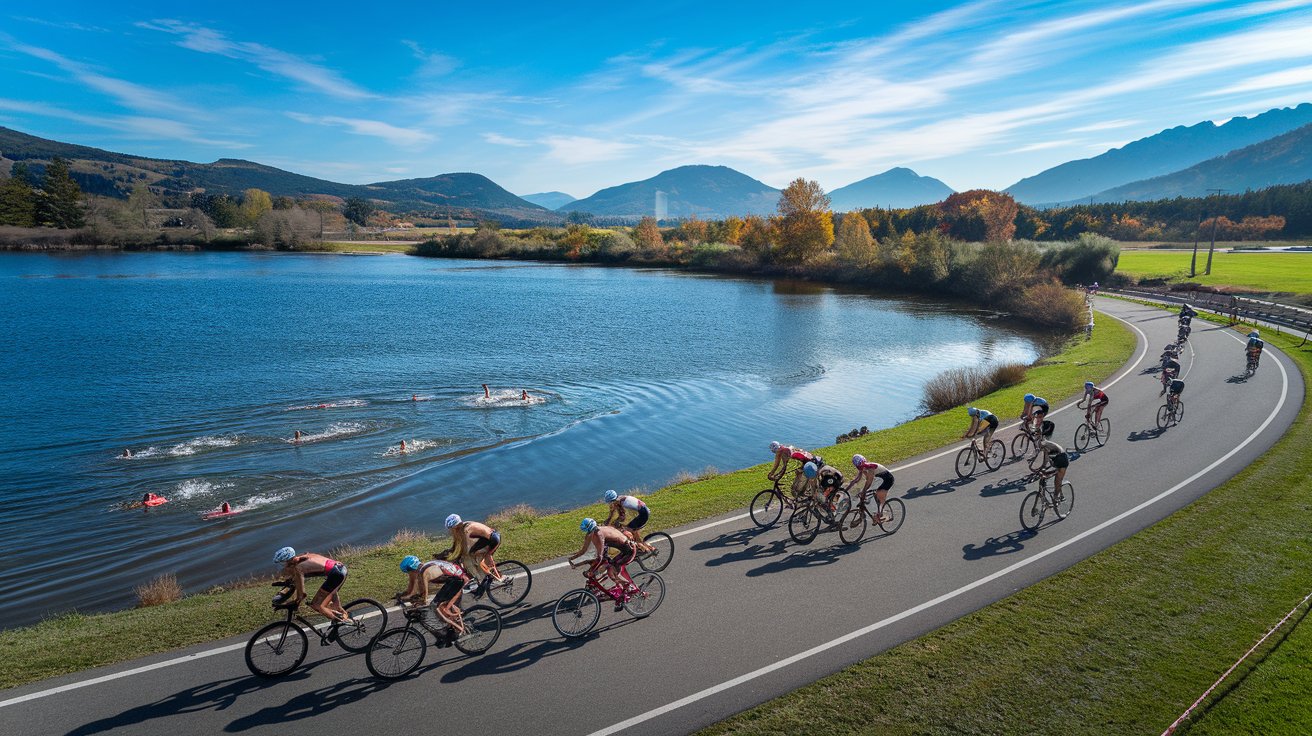
A triathlon’s difficulty varies significantly depending on the distance and your current fitness level. For most beginners, a Sprint Triathlon presents a challenging but achievable goal with 3-6 months of dedicated training, while an IRONMAN Triathlon ranks among the world’s most demanding endurance events requiring 12-18 months of preparation.
Understanding Triathlon Difficulty Levels
The difficulty of a triathlon depends primarily on distance, with four main categories recognized by USA Triathlon in 2025. Each level presents unique challenges that test your swimming, cycling, and running abilities in sequence without breaks between disciplines.
Sprint distance triathlons typically require 1-3 hours to complete, making them accessible to the average person with moderate fitness. Olympic distance events demand 2-4 hours of continuous effort, while Half IRONMAN distances push athletes for 4-8 hours. Full IRONMAN Triathlon events can take 8-17 hours to complete, representing the pinnacle of endurance sports difficulty.
Sprint Triathlon Difficulty Assessment
Sprint triathlons feature a 750-meter swim, 20-kilometer bike ride, and 5-kilometer run, making them the most approachable option for beginners. Most athletes with basic fitness can complete this distance with 12-16 weeks of structured training, though competitive times require significantly more preparation and natural athletic ability.
Olympic Distance Challenge Level
The Olympic triathlon distance includes a 1.5-kilometer swim, 40-kilometer bike segment, and 10-kilometer run. This distance typically requires 16-24 weeks of training for newcomers and presents the first significant endurance challenge, with most athletes needing 2.5-4 hours to finish their first Olympic distance event.
Physical Demands and Training Requirements
Training for any triathlon distance requires developing cardiovascular fitness across three distinct disciplines while managing the cumulative fatigue from multi-sport training. The hardest aspect for most athletes involves mastering efficient transitions between swimming, cycling, and running while maintaining energy reserves throughout the entire race.
A typical training week for Sprint distance preparation includes 4-6 hours of combined swimming, cycling, and running activities. Olympic distance training usually demands 6-10 hours weekly, while IRONMAN preparation often requires 15-25 hours per week of structured training across all three disciplines.
Swimming Component Difficulty
Open water swimming presents the greatest challenge for most triathlon newcomers, as it requires different techniques than pool swimming plus navigation skills and comfort in potentially rough conditions. Many athletes find the swim portion mentally demanding due to crowded starts and unfamiliar environments, making it the most intimidating discipline for beginners.
Cycling and Running Challenges
The cycling segment typically feels most manageable for recreational athletes but requires specific bike handling skills and pacing strategies to preserve energy for the run. The final running portion becomes the hardest part for many competitors due to accumulated fatigue from swimming and cycling, often resulting in significantly slower pace times compared to standalone runs.
Comparing Triathlon to Marathon Difficulty
Many athletes wonder whether a triathlon or marathon presents greater difficulty, with the answer depending on distance and individual strengths. A Sprint triathlon typically requires less overall training time than marathon preparation, while Olympic distance events demand similar commitment levels to completing a full 26.2-mile race.
IRONMAN events significantly exceed marathon difficulty due to their 8-17 hour duration and multi-discipline demands. The key difference lies in training complexity, as triathlon preparation requires mastering three sports plus transition skills, while marathon training focuses on optimizing single-sport performance and pacing strategies.
Mental Toughness and Race Day Complexity
Race day logistics add significant complexity to triathlon participation beyond the physical demands. Athletes must manage equipment for three sports, execute efficient transitions, and maintain mental focus across varying conditions and challenges that can span several hours of continuous competition.
The mental aspect becomes particularly challenging during longer distances, where athletes face multiple low points and must problem-solve equipment issues, nutrition timing, and pacing decisions throughout the event. Weather conditions, mechanical problems, and physical discomfort test mental resilience more severely than single-sport events.
Transition Area Management
Mastering transitions between disciplines can significantly impact overall performance and adds unique stress to triathlon competition. Efficient T1 (swim-to-bike) and T2 (bike-to-run) transitions require practice and organization skills that don’t exist in single-sport events, contributing to the overall difficulty assessment.
Nutrition and Hydration Strategy
Longer triathlon distances require complex fueling strategies that must work across three different activities with varying intensity levels. Managing nutrition timing, product selection, and hydration needs while maintaining performance adds another layer of difficulty that beginners often underestimate during their first events.
Equipment and Financial Considerations
Triathlon participation requires more specialized equipment than most sports, creating both financial and logistical challenges. A basic setup for Sprint distance events typically costs $800-2,000, while competitive IRONMAN equipment can exceed $5,000-10,000 for bikes, wetsuits, and accessories.
Beyond initial costs, athletes must learn to maintain and transport multiple pieces of equipment, adding complexity to training and race preparation. Equipment malfunctions during events can end participation abruptly, making mechanical knowledge and backup planning essential skills for serious triathlon competitors.
Success Rates and Completion Statistics
According to 2024 USA Triathlon data, approximately 95% of registered Sprint triathlon participants successfully complete their events, while Olympic distance completion rates hover around 88-92%. IRONMAN events see completion rates between 80-85%, with weather conditions and course difficulty significantly impacting these percentages.
For first-time participants, completion rates drop slightly due to inexperience with pacing, nutrition, and race day logistics. However, athletes who complete adequate training programs show success rates above 90% across all distances, indicating that preparation rather than natural ability determines most triathlon outcomes.
Age Group and Demographic Considerations
Triathlon difficulty varies significantly by age and starting fitness level, with athletes in their 30s and 40s often performing best due to optimal combinations of fitness, experience, and recovery capacity. Younger athletes may struggle with pacing and strategy, while masters competitors (50+) often excel through superior race management and consistent training approaches.
Gender differences in triathlon difficulty are minimal at recreational levels, though women often show superior pacing discipline and nutrition management during longer events. The sport’s inclusive nature means the average person can successfully complete Sprint and Olympic distances regardless of athletic background with proper preparation.
Related video about how hard is a triathlon
This video complements the article information with a practical visual demonstration.
Most asked questions about how hard is a triathlon
Can the average person do a triathlon?
Yes, the average person can complete a Sprint triathlon with 12-16 weeks of training. Sprint distances (750m swim, 20km bike, 5km run) are designed for recreational athletes and require moderate fitness rather than exceptional athletic ability. Success depends more on consistent training and proper preparation than natural talent.
What is the hardest part of triathlon?
The hardest part varies by individual, but most beginners find open water swimming most intimidating due to navigation, crowded conditions, and different techniques from pool swimming. The final run segment often becomes most physically difficult due to accumulated fatigue from swimming and cycling.
Is a triathlon harder than a marathon?
Sprint and Olympic triathlons are generally less demanding than marathons in total training time, but require mastering three disciplines plus transitions. IRONMAN events significantly exceed marathon difficulty due to their 8-17 hour duration and complex logistics. Training complexity is higher for triathlon due to multi-sport requirements.
How difficult is it to do a triathlon for beginners?
Sprint triathlon difficulty for beginners is moderate with proper training. Most newcomers need 3-4 months of structured preparation including swimming technique work, bike handling skills, and run fitness. The learning curve is steeper than single sports due to equipment, transitions, and three-discipline training requirements.
Can a beginner do a triathlon without prior experience?
Beginners can successfully complete triathlons with dedicated training, even without prior competitive experience. However, basic swimming ability is essential, and most successful first-timers invest 12-20 weeks in structured training programs that cover technique, pacing, and race day logistics for optimal results.
| Distance | Training Time Needed | Difficulty Level |
|---|---|---|
| Sprint Triathlon | 12-16 weeks | Moderate – Beginner Friendly |
| Olympic Distance | 16-24 weeks | Challenging – Intermediate |
| Half IRONMAN | 6-12 months | Very Difficult – Advanced |
| Full IRONMAN | 12-18 months | Extremely Difficult – Elite |

