
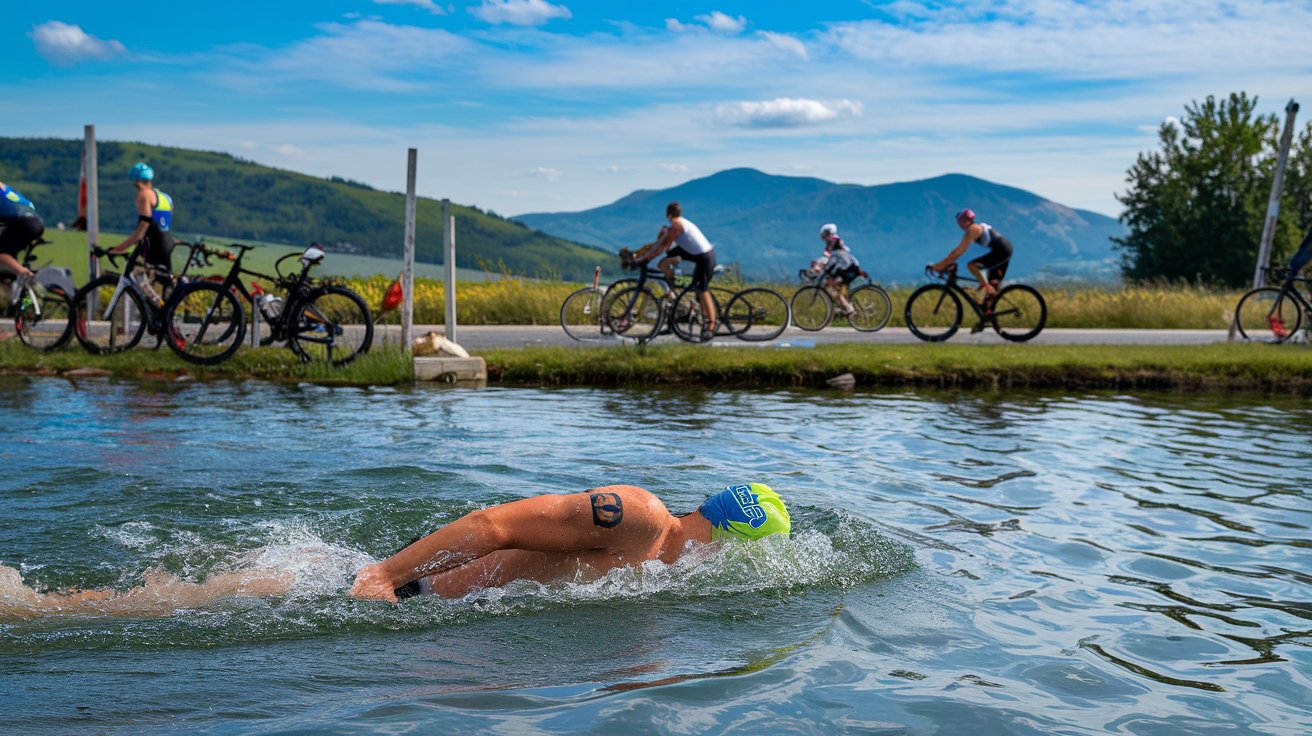
A triathlon consists of three consecutive endurance sports: swimming, cycling, and running, performed in that specific order without breaks. This multisport event challenges athletes across different disciplines, making it one of the most comprehensive fitness tests available. Understanding what makes up a triathlon is essential for anyone considering this exciting sport.
What Are the Three Sports in a Triathlon
The three sports that make up a triathlon are always performed in the same sequence: swimming first, followed by cycling, then running. This specific order was established to minimize the risk of drowning, as swimming while fatigued from other activities could be dangerous. Each discipline tests different muscle groups and energy systems, creating a comprehensive athletic challenge.
The swimming portion typically takes place in open water venues like lakes, rivers, or oceans, though some races use pools. Cycling follows immediately after, requiring participants to transition from swim gear to bike equipment. The running segment concludes the race, often considered the most challenging as athletes must overcome fatigue from the previous two disciplines.
Swimming: The First Discipline
Swimming in a triathlon presents unique challenges compared to pool swimming. Athletes must navigate open water conditions including currents, waves, and limited visibility. Mass starts create additional complexity as hundreds of swimmers begin simultaneously. Proper sighting techniques and efficient stroke mechanics become crucial for success in this opening discipline.
Cycling: The Longest Segment
The cycling portion typically represents the longest segment of any triathlon in terms of both distance and time duration. Athletes must master bike handling skills, pacing strategies, and aerodynamic positioning. Equipment choices significantly impact performance, with aerodynamic wheels, frames, and positioning systems providing competitive advantages in longer distance events.
Running: The Final Challenge
Running concludes every triathlon, testing an athlete’s ability to maintain pace while experiencing brick legs – the heavy, stiff feeling after transitioning from cycling. This phenomenon occurs due to different muscle recruitment patterns between cycling and running. Mental toughness becomes paramount as athletes push through accumulated fatigue from the previous disciplines.
Triathlon Distances and How Long They Take
Triathlon distances vary significantly, accommodating athletes of different skill levels and time commitments. The most common triathlon distance categories include Sprint, Olympic, Half Ironman (70.3), and Full Ironman (140.6). Each distance category has specific requirements and typical completion times that help athletes choose appropriate events for their fitness level.
Understanding these distances helps participants set realistic training goals and race expectations. Completion times vary widely based on individual fitness, weather conditions, and course difficulty, but established ranges provide helpful benchmarks for planning and preparation.
Sprint and Olympic Distance Triathlons
Sprint triathlons typically include a 0.5-mile swim, 12.4-mile bike ride, and 3.1-mile run, usually taking 1-2 hours to complete. Olympic distance events feature a 0.93-mile swim, 24.8-mile bike segment, and 6.2-mile run, requiring 2-4 hours for most participants. These shorter distances serve as excellent entry points for new triathletes.
Half Ironman and Ironman Distances
Half Ironman races consist of a 1.2-mile swim, 56-mile bike ride, and 13.1-mile run, typically requiring 4-7 hours to complete. Full Ironman distances include a 2.4-mile swim, 112-mile bike segment, and 26.2-mile marathon run, taking 8-17 hours for most athletes. These longer events require extensive training and preparation.
Understanding Triathlon Transitions
Transitions represent the fourth discipline in triathlon, often called T1 (swim-to-bike) and T2 (bike-to-run). These transition periods are timed and included in overall race results, making efficiency crucial for competitive performance. Athletes must quickly change equipment, clothing, and mentally prepare for the next discipline while managing fatigue and maintaining focus.
Successful transitions require practice and organization. Transition area setup follows specific rules and etiquette, with designated spaces for each participant’s equipment. Understanding transition procedures and practicing equipment changes can save valuable minutes during races and reduce stress on race day.
Major Triathlon Organizations and Race Series
Several major organizations govern and promote triathlon racing worldwide. World Triathlon (formerly ITU) serves as the international governing body, overseeing Olympic triathlon competition and world championship events. IRONMAN and Challenge Family organize long-distance races, while newer series like T100 focus on middle-distance professional competition.
Each organization maintains specific rules, standards, and qualification systems. Understanding these different race organizers helps athletes choose events that align with their goals and competitive aspirations. Many organizations offer age-group categories and qualification pathways to prestigious championship events.
World Triathlon and Olympic Competition
World Triathlon Championship Series represents the highest level of short-course racing, featuring Olympic distance events in major cities worldwide. This series determines world champions and Olympic team selections. The organization also oversees youth development, paratriathlon, and various distance categories beyond Olympic racing.
IRONMAN and Long-Distance Racing
IRONMAN events have become synonymous with ultimate endurance challenges, featuring the classic 2.4-mile swim, 112-mile bike, and 26.2-mile run format. The organization hosts over 40 full-distance events annually, plus numerous 70.3 half-distance races. Qualification systems allow age-group athletes to earn spots at the IRONMAN World Championship in Hawaii.
Getting Started: Your First Triathlon
Beginning triathlon requires gradual progression and proper preparation across multiple disciplines. New athletes should start with sprint distance events to gain experience with transitions, race procedures, and multisport demands. Most first-time participants benefit from 8-12 weeks of structured training that builds endurance while developing skills in each discipline.
Success in your first triathlon depends more on finishing comfortably than achieving fast times. Focus on technique development, proper equipment selection, and race-day preparation rather than intensive speed work. Many local clubs and coaches offer beginner-friendly training programs specifically designed for first-time triathletes.
Triathlon Equipment and Gear Essentials
Basic triathlon equipment includes swim goggles, a bike, helmet, and running shoes, though additional gear can enhance performance and comfort. Essential triathlon gear varies by race distance and conditions, but safety equipment like helmets remains mandatory. Many beginners can participate using existing athletic equipment before investing in specialized triathlon gear.
Wetsuit requirements depend on water temperature and race regulations. Bike equipment needs range from basic road bikes for beginners to advanced aerodynamic setups for competitive athletes. Transition bags, nutrition systems, and race clothing represent additional considerations as athletes progress in the sport.
Swimming Equipment for Triathlons
Swimming gear includes goggles, swim caps (often provided by race organizers), and potentially wetsuits for cold water conditions. Wetsuit regulations vary by water temperature and race organization, with some events mandating wetsuits below certain temperatures while others prohibit them above specific thresholds. Quality goggles with anti-fog coating prove essential for open water visibility.
Cycling and Running Equipment
Bike requirements include a roadworthy bicycle, properly fitted helmet, and appropriate cycling shoes or pedals. Running gear needs focus primarily on well-fitted shoes suitable for the expected race conditions and distance. Many athletes benefit from elastic laces or quick-closure systems that speed transitions between disciplines.
Triathlon Costs and Budget Considerations
Triathlon participation costs vary significantly based on race distance, location, and equipment choices. Entry fees typically range from $75-150 for sprint races to $300-700 for IRONMAN events. Additional expenses include travel, accommodation, equipment, coaching, and training-related costs like pool or gym memberships.
Budget-conscious beginners can minimize initial costs by using borrowed or basic equipment and choosing local races. Equipment investments should progress gradually as athletes gain experience and identify specific needs. Many experienced triathletes recommend prioritizing safety gear and proper bike fitting over expensive aerodynamic equipment for newcomers.
What to Expect on Race Day
Race day experiences vary by event size and distance, but common elements include early registration, transition area setup, pre-race briefings, and wave-based starts. First-time participants should arrive early to familiarize themselves with transition areas, course layout, and specific race procedures. Weather conditions and water temperature can significantly impact race experiences.
Mental preparation proves as important as physical readiness for successful race completion. Understanding that challenges are normal parts of triathlon racing helps athletes maintain positive attitudes when facing difficulties. Most races provide medical support, nutrition stations, and volunteer assistance throughout the course.
Related video about what consists of a triathlon
This video complements the article information with a practical visual demonstration.
What you should know
What are the three sports in order of a triathlon?
The three sports in a triathlon are performed in this specific order: swimming first, cycling second, and running third. This sequence is standardized worldwide and designed for safety reasons, as swimming while fatigued from other activities could be dangerous.
What are the distances for a triathlon?
Triathlon distances vary by category. Sprint distance includes 0.5-mile swim, 12.4-mile bike, 3.1-mile run. Olympic distance features 0.93-mile swim, 24.8-mile bike, 6.2-mile run. Half Ironman includes 1.2-mile swim, 56-mile bike, 13.1-mile run. Full Ironman consists of 2.4-mile swim, 112-mile bike, 26.2-mile run.
How long does a triathlon usually take?
Triathlon completion times depend on distance and individual fitness levels. Sprint triathlons typically take 1-2 hours, Olympic distance requires 2-4 hours, Half Ironman usually takes 4-7 hours, and Full Ironman ranges from 8-17 hours for most participants.
What does an Olympic triathlon include?
An Olympic triathlon includes a 0.93-mile (1.5km) swim, 24.8-mile (40km) bike ride, and 6.2-mile (10km) run, performed consecutively. This is the standard distance used in Olympic Games competition and World Triathlon Championship Series events.
How much does it cost to do a triathlon?
Triathlon costs vary significantly. Entry fees range from $75-150 for sprint races to $300-700 for IRONMAN events. Additional costs include equipment (can start with basic gear under $500), travel, accommodation, and potential coaching fees. Total first-year costs typically range from $1,000-3,000 depending on choices.
What equipment do I need for my first triathlon?
Essential equipment includes swim goggles, a roadworthy bicycle, properly fitted helmet, running shoes, and appropriate athletic clothing. Optional items include wetsuit (temperature dependent), cycling shoes, and transition-specific gear. Many beginners can start with basic athletic equipment before investing in specialized triathlon gear.
| Triathlon Component | Key Details | Main Benefits |
|---|---|---|
| Three Sports Sequence | Swimming, Cycling, Running in order | Comprehensive fitness test across multiple disciplines |
| Distance Variety | Sprint to Ironman distances available | Options for all fitness levels and time commitments |
| Transition Skills | T1 and T2 equipment changes timed | Develops efficiency and multitasking abilities |
| Entry Requirements | Basic equipment and swimming ability | Accessible sport with scalable investment levels |

