
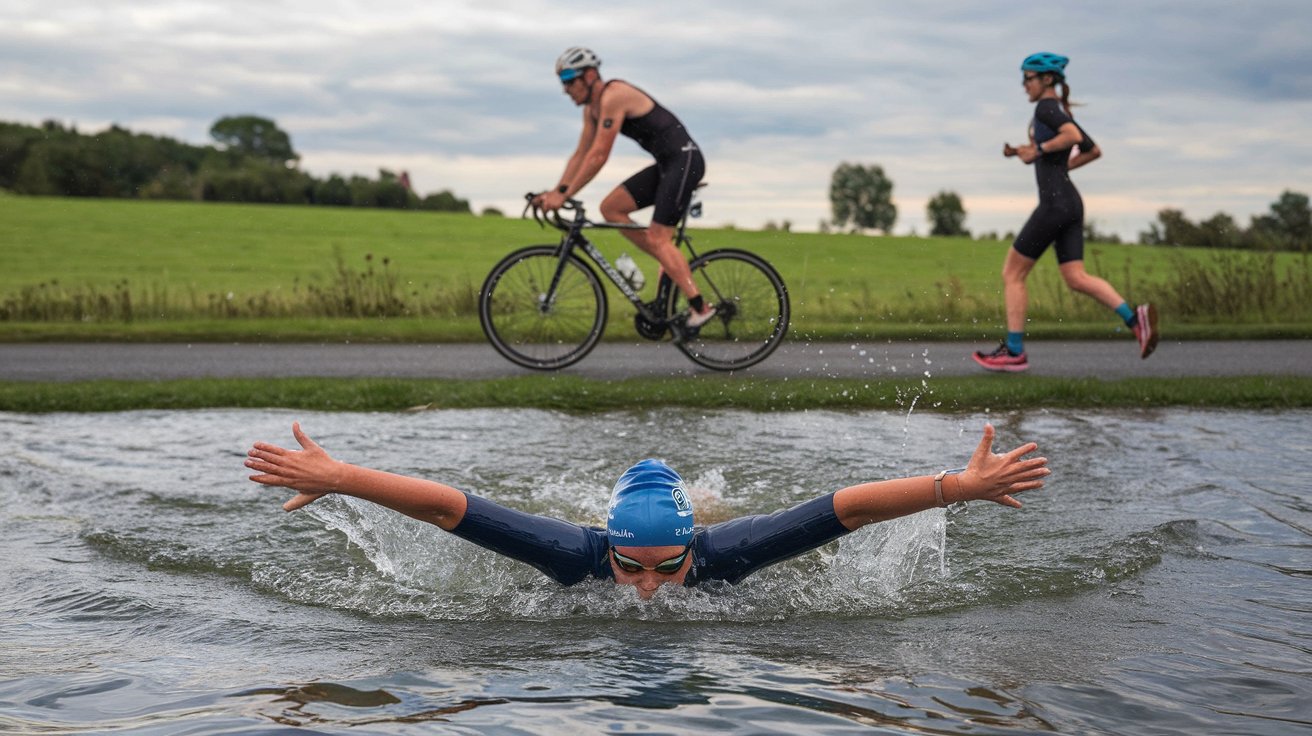
A triathlon consists of three disciplines completed consecutively: swimming, cycling, and running. This endurance sport challenges athletes to master multiple skills while transitioning between each segment. Understanding what makes up a triathlon is essential for anyone considering this rewarding multisport challenge.
The Three Sports That Make Up a Triathlon
Every triathlon consists of three fundamental sports performed in a specific order. The swimming portion always comes first, followed by cycling, and concludes with running. This sequence was established to maximize safety and performance, as swimming requires the most technical skill and energy when athletes are fresh.
The three sports in a triathlon test different muscle groups and energy systems. Swimming engages the upper body and core, cycling primarily uses the legs while providing some recovery, and running demands full-body endurance. This combination creates a unique challenge that distinguishes triathlon from single-sport competitions.
Swimming: The Opening Discipline
Swimming begins every triathlon and presents the greatest technical challenge for most athletes. Triathlon swimming typically occurs in open water environments like lakes, rivers, or oceans, though some races use pools. Athletes must navigate through water while wearing wetsuits in colder conditions, making this segment particularly demanding for beginners.
Cycling: The Longest Segment
The cycling portion represents the longest segment by both distance and time in most triathlon formats. Athletes transition from swimming to cycling, requiring them to quickly change from swimwear to cycling gear. This discipline allows for some recovery while maintaining speed and preparing the legs for the final running segment.
Running: The Final Challenge
Running concludes every triathlon and tests an athlete’s remaining endurance after completing two prior disciplines. The triathlon run requires mental toughness as fatigue sets in, particularly in the legs that have been working throughout the cycling segment. Many athletes experience heavy legs during this transition, making proper pacing crucial.
Standard Triathlon Distances and Race Categories
Understanding triathlon distances helps athletes choose appropriate races for their fitness level and experience. The sport offers multiple distance categories, from beginner-friendly sprint races to ultra-distance challenges. Each distance category maintains the same three-sport format while varying the length of each segment.
In 2025, USA Triathlon recognizes five main distance categories that cater to different athlete abilities. These standardized distances ensure consistency across races and allow athletes to compare performances across different events and locations.
Sprint Distance: Beginner-Friendly Option
Sprint triathlon distance typically includes a 750-meter swim, 20-kilometer bike ride, and 5-kilometer run. This format serves as an ideal introduction to the sport, allowing new athletes to experience all three disciplines without overwhelming distance requirements. Most sprint races can be completed in 1-3 hours depending on fitness level.
Olympic Distance: International Standard
The Olympic distance triathlon features a 1.5-kilometer swim, 40-kilometer bike, and 10-kilometer run. Also known as standard distance, this format appears in Olympic Games and World Championship events. Completion times typically range from 2-4 hours for age group athletes, making it a popular step up from sprint distance.
Half Ironman and Full Ironman Distances
A Half Ironman consists of a 1.9-kilometer swim, 90-kilometer bike, and 21.1-kilometer run, typically requiring 4-8 hours to complete. The full Ironman triathlon doubles these distances with a 3.8-kilometer swim, 180-kilometer bike, and 42.2-kilometer marathon run. These ultra-distance events represent the pinnacle of triathlon endurance racing.
Understanding Triathlon Transitions
Triathlon transitions represent the fourth discipline of the sport, connecting the three main segments. T1 occurs between swimming and cycling, while T2 happens between cycling and running. These transition areas require specific skills and strategies, as efficient transitions can significantly impact overall race performance.
Successful transitions involve quick equipment changes, body position adjustments, and mental preparation for the next discipline. Transition skills often separate experienced triathletes from beginners, as smooth transitions maintain momentum and save valuable time during competition.
T1: Swim to Bike Transition
The first transition requires athletes to remove swim gear, dry off if necessary, and prepare for cycling. This includes putting on cycling shoes, helmet, and potentially changing clothes. Wetsuit removal can be particularly challenging and time-consuming for new athletes, making practice essential.
T2: Bike to Run Transition
The second transition involves switching from cycling to running equipment while managing tired legs. Athletes must rack their bikes properly, change from cycling shoes to running shoes, and adjust their nutrition strategy. This transition often feels more difficult due to accumulated fatigue from the previous two disciplines.
Major Triathlon Race Organizations in the United States
Several prominent organizations oversee triathlon racing in the United States, each offering different race experiences and competitive levels. These organizations maintain safety standards, provide athlete rankings, and organize championship events. Understanding the landscape helps athletes choose appropriate races and competitive pathways.
USA Triathlon serves as the national governing body, while international organizations like World Triathlon and IRONMAN provide global racing opportunities. Each organization offers unique benefits, from local community races to world championship qualifications.
USA Triathlon: National Governing Body
USA Triathlon sanctions over 4,000 events annually across the United States and provides membership benefits including insurance, rankings, and qualification pathways to national championships. Their Age Group National Championships and Triathlon National Championships represent the pinnacle of amateur competition in America.
IRONMAN: Premium Long-Distance Racing
IRONMAN races represent the most prestigious ultra-distance triathlon events globally. The organization hosts full and half IRONMAN races throughout the United States, with qualification slots available for the IRONMAN World Championship in Hawaii. These events maintain strict time cutoffs and premium race experiences.
Challenge Family and World Triathlon Series
Challenge Family offers middle-distance racing with a European flair, while World Triathlon organizes elite-level competition including the World Triathlon Championship Series. These organizations provide alternative racing formats and qualification opportunities for serious competitive athletes.
Essential Equipment and Gear for Triathlon
Successful triathlon participation requires specialized equipment for each of the three disciplines. While basic gear can be affordable, athletes often invest in sport-specific equipment to improve performance and comfort. Understanding essential versus optional equipment helps new athletes budget appropriately and avoid unnecessary purchases.
Triathlon gear differs from single-sport equipment due to transition requirements and multi-discipline functionality. Many items serve dual purposes, such as triathlon-specific clothing designed to be worn throughout all three segments of the race.
Swimming Equipment Essentials
Basic swimming gear includes a wetsuit for open water races, goggles, and a swim cap provided by race organizers. Wetsuits provide buoyancy and warmth in water temperatures below 78°F, while high-quality goggles ensure clear vision during the swim segment. Anti-fog treatments and backup goggles are recommended for race day.
Cycling Equipment Requirements
Cycling equipment represents the largest equipment investment for most triathletes. Essential items include a road or triathlon bike, helmet, cycling shoes, and basic maintenance tools. While entry-level road bikes suffice for beginners, aerodynamic triathlon bikes provide advantages for competitive athletes focusing on longer distances.
Running Gear and Accessories
Running equipment requires the least specialized gear, with proper running shoes being the primary necessity. Many athletes use elastic laces for quick transitions, while others prefer traditional laces. Comfortable, moisture-wicking clothing designed for triathlon use eliminates the need for clothing changes between disciplines.
Getting Started: Your First Triathlon Experience
Beginning your first triathlon journey requires gradual preparation across all three disciplines plus transition practice. Most successful beginners start with sprint distance races after building base fitness in swimming, cycling, and running. The key lies in consistent training, proper equipment acquisition, and realistic goal setting.
Triathlon training for beginners should emphasize technique development over pure speed or distance. Many new athletes struggle most with swimming technique and open water confidence, making pool training and open water practice sessions essential preparation components.
Triathlon Training and Preparation Strategies
Effective triathlon training balances work across all three disciplines while incorporating rest and recovery periods. Most training plans span 12-20 weeks depending on the target race distance and athlete experience level. Successful preparation includes technique refinement, endurance building, and race-specific preparation including transition practice.
The difference between triathlon training and single-sport training lies in the need to manage fatigue across multiple disciplines while developing sport-specific skills. Athletes must learn to run effectively after cycling, manage nutrition across long training sessions, and perfect rapid transitions between sports.
Related video about what makes up a triathlon
This video complements the article information with a practical visual demonstration.
Your questions answered
What three sports are in a triathlon?
A triathlon consists of three sports performed consecutively: swimming, cycling, and running. These three disciplines are always completed in this specific order, with transition periods between each sport. The swimming portion comes first, followed by cycling, and concludes with running.
What is a standard triathlon distance?
The standard triathlon distance, also called Olympic distance, includes a 1.5-kilometer swim, 40-kilometer bike ride, and 10-kilometer run. This distance is used in Olympic Games and World Championship events, typically requiring 2-4 hours to complete for age group athletes.
What consists of a full triathlon?
A full triathlon, commonly called an IRONMAN, consists of a 3.8-kilometer swim, 180-kilometer bike ride, and 42.2-kilometer marathon run. This ultra-distance format represents the most challenging triathlon distance, typically requiring 8-17 hours to complete depending on athlete ability.
What’s the difference between a triathlon and an IRONMAN?
IRONMAN is a specific brand and distance of triathlon featuring a 3.8km swim, 180km bike, and 42.2km run. All IRONMANs are triathlons, but not all triathlons are IRONMANs. Triathlon refers to the sport in general, while IRONMAN refers to the specific ultra-distance format and race organization.
How much does it cost to do your first triathlon?
First triathlon costs typically range from $300-800 including race entry ($75-150), basic equipment rentals or purchases ($200-500), and training expenses. Sprint distance races offer the most affordable entry point, while equipment costs can be minimized through borrowing, buying used gear, or renting bikes and wetsuits.
What should I expect during triathlon transitions?
Triathlon transitions are designated areas where athletes change equipment between sports. T1 (swim to bike) involves removing swim gear and preparing cycling equipment, while T2 (bike to run) requires switching to running shoes and gear. Efficient transitions require practice and organization to minimize time spent changing equipment.
| Triathlon Component | Key Requirements | Primary Benefits |
|---|---|---|
| Swimming | Open water technique, wetsuit, goggles | Full-body workout, low impact |
| Cycling | Road bike, helmet, cycling shoes | Leg strength, active recovery |
| Running | Proper running shoes, moisture-wicking clothes | Cardiovascular endurance, mental toughness |
| Transitions | Organization, practice, quick changes | Time efficiency, race momentum |

